- Mon To Sat : 10 AM - 9 PM
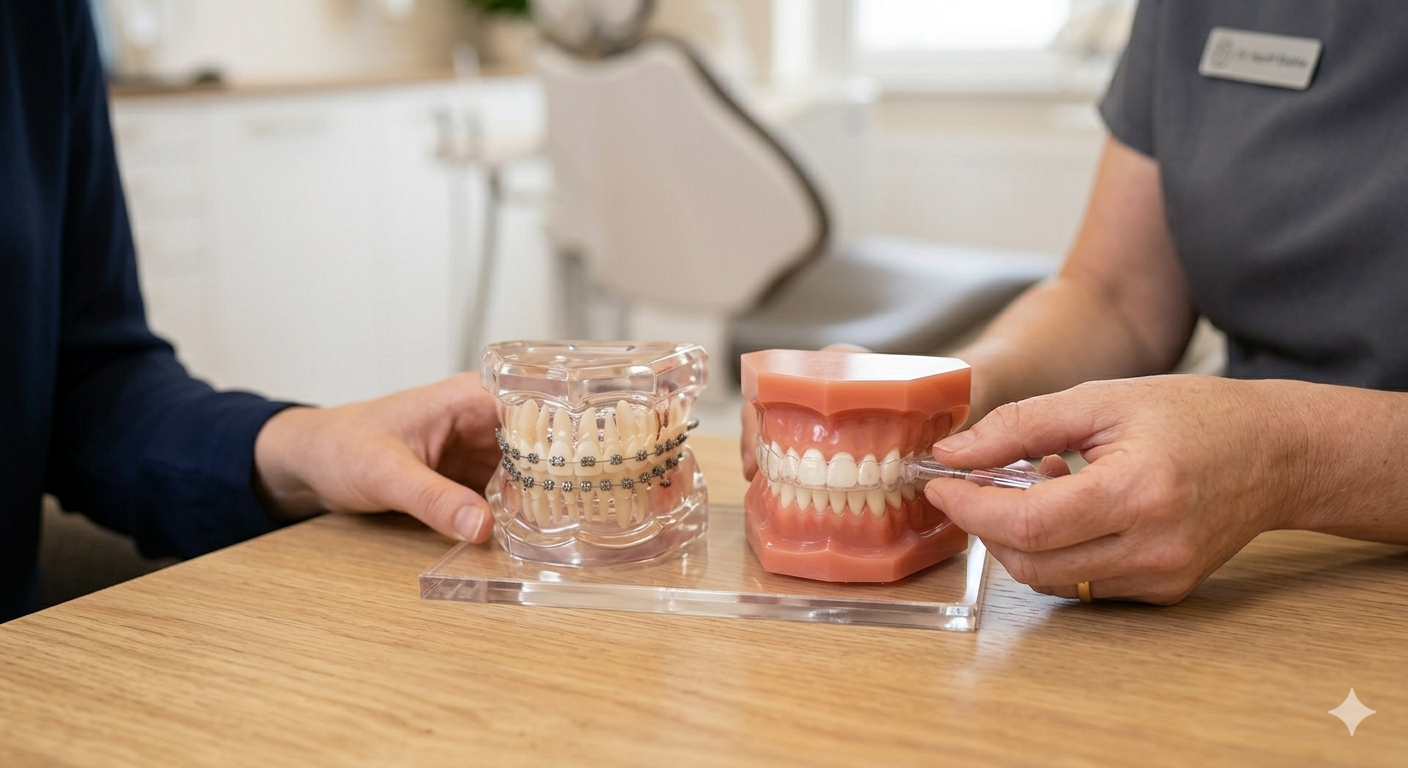
Invisalign vs Braces Choosing the Right Treatment for a Perfect Smile
Choosing the right orthodontic treatment can be confusing, especially when you’re trying to improve both your smile and oral health. Modern dentistry offers multiple solutions to straighten teeth, correct bite issues, and boost confidence. From traditional methods to more advanced options, each treatment comes with its own approach, benefits, and considerations depending on your specific dental needs.
When comparing Invisalign vs Braces, it’s important to look beyond just appearance. Factors such as comfort, effectiveness, treatment time, and daily convenience all play a key role in your decision. By understanding how each method works and what suits your lifestyle, you can confidently choose the treatment that helps you achieve the best long-term results.
What Are Braces and Invisalign? A Complete Guide to Teeth Alignment Treatments
Braces are fixed orthodontic devices used to straighten teeth and correct bite issues by applying continuous pressure through brackets and wires. They are commonly used for treating mild to severe alignment problems and are known for delivering precise and long-term results.
Invisalign is a modern orthodontic treatment that uses a series of clear, removable aligners custom-made to gradually move teeth into the desired position. It is designed to be more discreet and comfortable while still effectively improving teeth alignment.
Invisalign vs Braces Understanding Types Benefits and Limitations
Types of Braces
- Metal braces are the most common and highly effective for all types of alignment issues
- Ceramic braces work like metal braces but use tooth-colored material for a less visible look
- Lingual braces are fixed behind the teeth, making them completely hidden from the front view
How Braces Work
Braces function using a system of brackets and wires that apply continuous pressure to gradually move teeth into the correct position. Over time, this controlled force helps align teeth, improve bite issues, and create a well-balanced smile. Regular adjustments by an orthodontist ensure steady and effective progress.
Pros of Braces
- Highly effective for complex dental alignment cases
- Fixed on teeth, so there is no risk of forgetting to wear them
- Provides precise and controlled teeth movement for long-term results
Cons of Braces
- Visible appearance may affect smile aesthetics during treatment
- Certain food restrictions must be followed to avoid damage
- Requires regular cleaning and maintenance to prevent plaque buildup
Types of Invisalign
- Invisalign Full is designed for complex orthodontic cases requiring comprehensive treatment
- Invisalign Lite is suitable for mild to moderate alignment issues with fewer aligners
- Invisalign Express is used for minor corrections with shorter treatment duration
- Invisalign Teen is specially designed for teenagers with features like compliance indicators
How Invisalign Works
Invisalign uses a series of clear, custom-made aligners designed to gradually shift teeth into proper alignment. These aligners are replaced every few weeks to continue the progression, offering a modern and flexible approach to orthodontic treatment.
Pros of Invisalign
- Nearly invisible, making it a discreet orthodontic option
- Removable, allowing easy eating and better oral hygiene
- More comfortable with no metal wires or brackets
- Fewer dental visits compared to traditional braces
Cons of Invisalign
- Requires discipline as it must be worn 20–22 hours per day
- Not suitable for very severe or complex orthodontic cases
- Can be more expensive in some cases compared to braces
Treatment Duration
Treatment duration is an important factor when deciding between orthodontic options. In general, the time required for teeth alignment depends on the complexity of the dental case, patient compliance, and the type of treatment chosen. Some cases may require only minor adjustments, while others need longer and more detailed correction.
When comparing Invisalign vs Braces, treatment time can vary significantly. Traditional braces usually take around 12 to 24 months to complete treatment, as they are highly effective for complex dental issues. Invisalign, on the other hand, may take around 6 to 18 months for mild to moderate cases, but it requires strict discipline in wearing aligners for 20–22 hours daily to achieve timely results.
Invisalign vs Braces Which Treatment Is Better for Your Smile
Choose Braces If
Braces are a suitable option for individuals dealing with severe teeth misalignment or complex orthodontic issues that require precise correction. They are also a practical choice for those working within a limited budget, as they are generally more affordable compared to other treatment options. Additionally, braces are ideal for patients who prefer a fixed solution and do not want the responsibility of removing and wearing aligners daily, ensuring consistent progress throughout the treatment period.
Choose Invisalign If
Invisalign is best suited for patients with mild to moderate dental alignment issues who are looking for a more discreet treatment option. It is especially preferred by individuals who have strong aesthetic concerns and want a nearly invisible solution while undergoing orthodontic care. This option is also highly beneficial for professionals or socially active individuals who need flexibility, comfort, and convenience in their daily lifestyle.
Post Treatment Care and Maintenance Guide
Proper maintenance and aftercare play a crucial role in ensuring successful and long-lasting orthodontic results. Daily cleaning habits and good oral hygiene help prevent plaque buildup, cavities, and gum issues throughout the treatment process. Patients must also follow specific care routines based on the type of orthodontic appliance they use.
When comparing Invisalign vs Braces, maintenance requirements differ significantly. Braces require careful cleaning around brackets and wires, which can be challenging and time-consuming, along with avoiding certain foods that may cause damage. Invisalign aligners are easier to maintain as they can be removed for brushing and flossing, allowing better oral hygiene. Regardless of the treatment, maintaining proper oral care and wearing retainers after completion is essential to preserve results and prevent teeth from shifting back to their original position.
Conclusion Making the Right Choice for Your Smile
Choosing the right orthodontic treatment depends on your dental needs, lifestyle, and budget, as both options effectively improve teeth alignment and smile appearance. Understanding the key differences helps you make a confident decision for long-term results.
Book a consultation with a dental specialist today to get a personalized treatment plan and start your journey toward a healthier, more confident smile.
FAQ’s(Frequently Asked Questions)
1. What is the main difference between Invisalign and braces?
Braces use metal or ceramic brackets fixed to your teeth, while Invisalign uses clear, removable aligners. Both are designed to straighten teeth, but Invisalign is more discreet and flexible.
2. Which is better: Invisalign vs Braces?
It depends on your dental condition and lifestyle. Braces are better for complex alignment issues, while Invisalign is ideal for mild to moderate cases and those who prefer a nearly invisible option.
3. Is Invisalign faster than braces?
In some cases, Invisalign can work faster, especially for simple corrections. However, treatment time depends on the complexity of your teeth alignment and patient compliance.
4. Are braces more painful than Invisalign?
Both treatments may cause mild discomfort at the beginning or after adjustments. Braces may cause more irritation due to wires, while Invisalign is generally more comfortable.
5. Can Invisalign fix all dental problems like braces?
No, Invisalign is not suitable for all cases. Severe crowding, major bite issues, or complex tooth movements are usually treated more effectively with braces.